Services · Websites

Websites built around the way the business works

Kingswood Wedding Cars

Couples can look inside the cars, check the hire price and enquire for their wedding date.
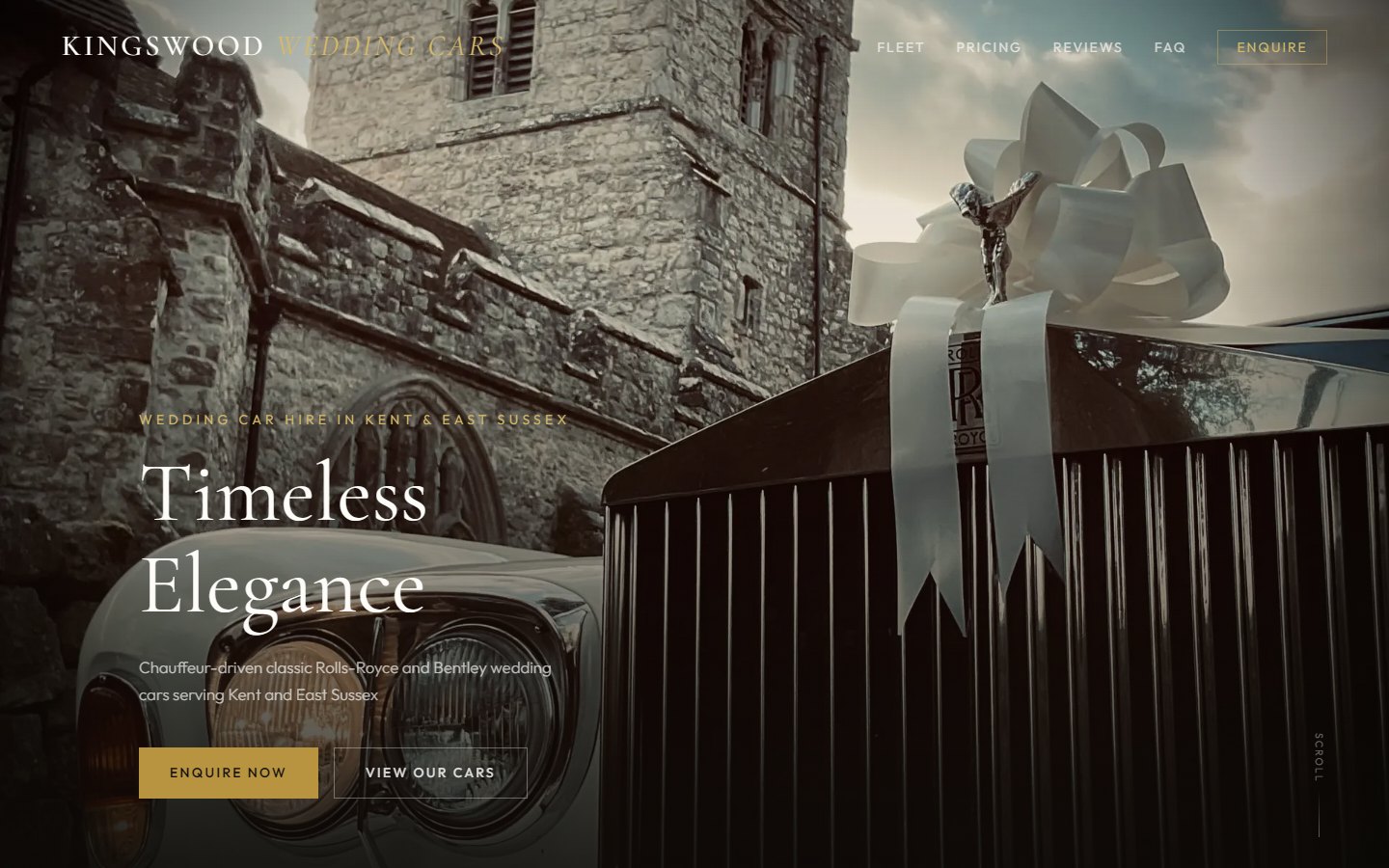
Kingswood Wedding Cars homepage with the chauffeur-driven Rolls-Royce

Working example

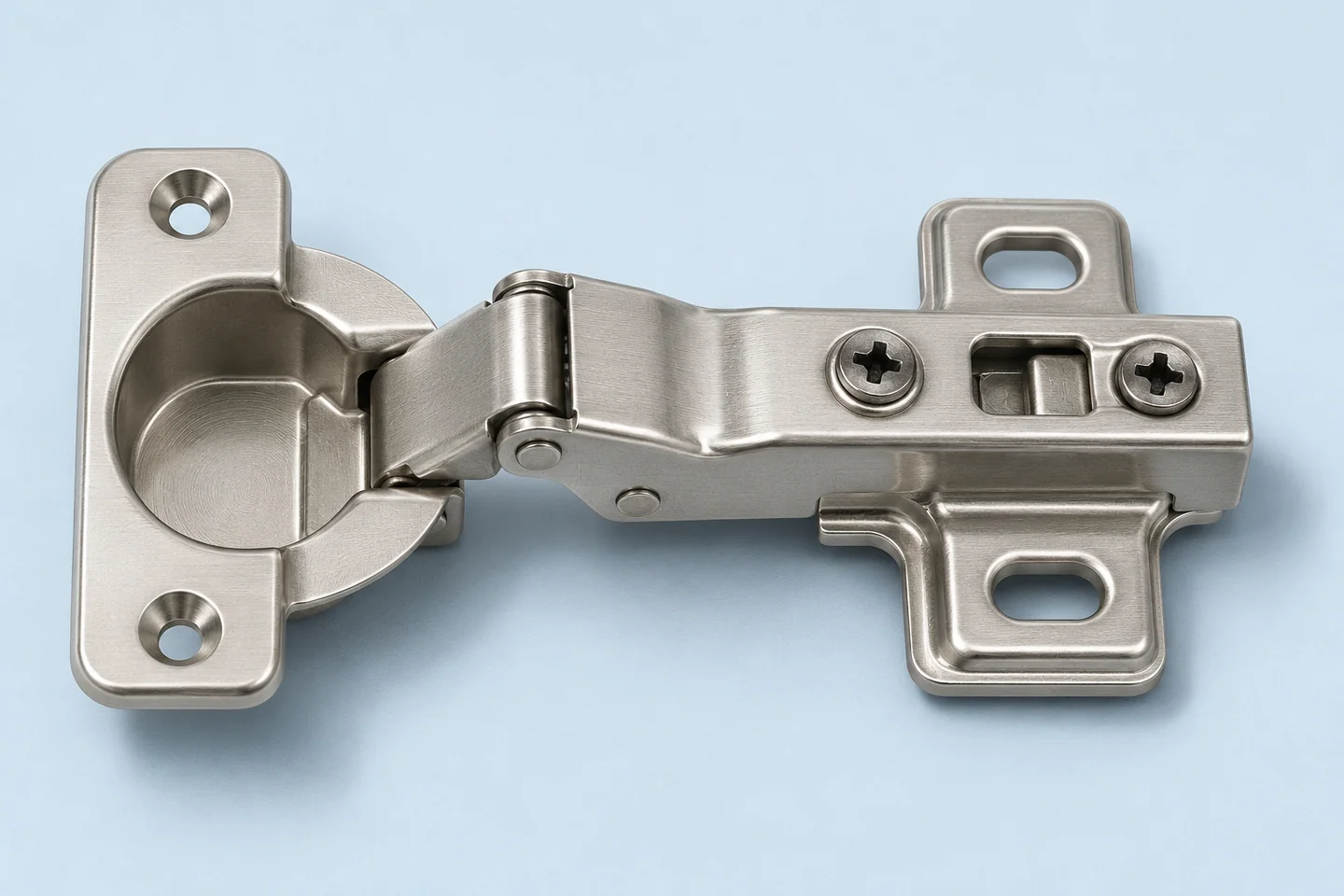
Dovetail Parts

A trade catalogue of cabinet hinges. Filter by opening angle, open a part’s specification, then review or download a quote.

Try the hinge catalogue

Working example

Sunday Stock

A greengrocer’s weekly box. Add from the photograph, watch the box fill, book a Sunday slot and see the packing list the shop would get.

Build a produce box

We design and code every website from scratch. Your brief shapes the layout, the imagery and the way each interaction works, from how a menu opens on a phone to how a customer chooses a delivery slot. We use animation where it helps someone use the site or see your work in more detail.

We don’t start with a template or load the site with plugins that slow it down. The design comes from your business and what your customers need to do, so you get a site that feels like yours without the same effects you’ve seen everywhere else.

A website earns its place when it does a job for the business: bringing in enquiries, taking bookings or orders, showing the work, or giving customers somewhere to log in. The people who build it here also keep books and build the systems behind them, so what the site takes in can reach the right person, the CRM and the accounts from the start.

Custom-built websites, managed by our team

On our monthly management plan, a quick WhatsApp message or email to the team is all it takes to request a change.

Send the new opening hours, a revised menu or a photo of a finished job. If a request falls outside your plan, we agree the cost with you first.

See websites we’ve built, including Kingswood Wedding Cars and Ramsell Construction. Or browse 24 website design concepts for businesses that need online shops, bookings or customer portals.

What a site can do

Lead generation
Service and location pages for the work you want more of, technical SEO so search engines can crawl and index the site, and enquiry forms that arrive in your CRM with a note of where they came from.
Portfolio
Finished jobs, photographs, drawings and films turned into case studies. The records behind them stay private.
Booking
Appointments, tables or visits booked online against the availability you set, with confirmations and reminders.
Ecommerce
A shop on your own site, or the platforms you already sell on, with each sale’s fees, refunds and VAT carried into the accounts.
Ordering
A menu with ordering built into your own site, for delivery or collection, with each order sent to the kitchen or counter. Try the demo below.
Membership
Members’ areas, sign-ups and renewals, with payments taken through your payment provider.
Portals
Private areas for clients or staff, opened by invitation with the email address verified, holding the forms and documents they need.
Integrations
Connections to Xero, your CRM, booking and payment systems and the marketplaces you sell on, so each record is entered once.

Try ordering for delivery or collection

A fictional café’s menu with ordering built in, as it could sit on a business’s own site. Choose some food, pick delivery or collection and a time, and see what the customer, the kitchen and the accounts would each get. It runs entirely in this page: nothing is ordered, sent, stored or paid for.

The demo needs JavaScript. This is what it walks through:

  • The customer chooses from a short menu of a wrap, a sandwich, soup, sides and drinks, picks delivery or collection and a time, and sees the basket total. Delivery adds a charge and needs a minimum order.
  • At checkout, a real site asks for a name and phone number, and the address for a delivery, and takes payment through the business’s payment provider. The demo asks for nothing and takes no payment.
  • The same order then goes three ways. The customer sees a confirmation with the time and the total. The kitchen sees the order reference, delivery or collection, the time and the items. The accounts record the sale and its VAT, the payment provider’s fee, and the payout matched when it reaches the bank.

New sites, rebuilds and management

A new website
From what the business needs the site to do, through the pages, forms and connections, to launch. You approve the content and the design before it goes live.
A rebuild
We keep what already works: the pages and addresses that bring visitors in, redirecting any that change, and the content worth keeping. Then we rebuild the rest around what the site now needs to do.
Ongoing management
Once a site is live we can keep it running: updates and fixes, content changes, checking that enquiries, bookings and orders arrive, and fixing connections when a provider changes something.

How the costs work

We don’t publish website prices, because they depend on what the site needs to do. The aim is a low-cost site that does its job, without paying for features the business won’t use. What you pay falls into three parts, and the proposal shows each one separately.

The build: a project
Quoted once the scope is clear, in writing, before any work starts. If we need to look through your current site or systems first, that is agreed as a fixed fee.
Running it: monthly
A monthly fee for looking after the site, with what it covers set out in the proposal.
Third parties: shown separately
The domain and hosting, your payment provider’s fees, any booking or ordering service you choose, and subscriptions you pay for directly.

See how we agree fees and how an engagement works.

How we check a site

A lower cost doesn’t mean fewer checks. Before a site goes live, it goes through the checks this site does:

  • every page at desktop and phone widths, with nothing cut off or pushed sideways;
  • by keyboard alone, and with JavaScript turned off;
  • every link and enquiry button, with a test enquiry followed through to where it is stored, as on the wedding-car update below;
  • for a shop or ordering, the totals, the delivery rules and the payment steps, as in the demo above.

Where we’ve built this already

Enquiries and search
Service pages and technical SEO and indexing work, and enquiries that arrive in a CRM with their source. Getting noticed and finding work.
Portfolio material
Ten years of a business’s own email and accounting records turned into promotional material, with the records kept private. Client work, completed. Work we’ve done.
A website update
An update to a wedding-car hire business’s website. The enquiries the site already held were kept, and a test enquiry sent through the updated form reached the form service and was saved in the site’s admin storage. Client work.
A client portal
Client onboarding in the In Good Order CRM: a private invitation, a verified email address, and a form that fills in the records and the engagement letter. Our own system, in use. The CRM overview.
Software for a client’s teams
A CRM built from scratch so sales, operations and marketing work from one customer record, with each person seeing what their role needs. Client work, deployed. On the Work page.
Ecommerce integrations
Sales from seven named marketplaces brought into the accounts, settlement by settlement. Client work, running. The case study.

The café in the ordering demo is an illustration, not a client. It shows what a customer would go through and where each order would go; on a real site, the menu, the delivery area and times, and the payment provider are agreed with you.

Your website brief

Choose what you need and what the site should do. You’ll see what’s worth having ready for the first conversation, and the enquiry carries your choices to Andrew.

For the first conversation, have ready what the business does, the address of any site you have now, and what you’d like a site to do.

A site you’d like built or looked after

Tell Andrew what the business does and what you’d like a website to do. The first conversation is free. If he needs to look through your current site or systems before he can price the work, he’ll agree a fixed fee for that first, and the build and any ongoing management are quoted before work starts.

Prefer email? Write to andrew@ingoodorder.co.uk.

Tell Andrew what you need

What happens next. Andrew reads your enquiry and replies by email.

Tell us what you need help with and how you handle it today.

Please don’t include passwords, log-in details or account numbers.

This helps Andrew see where enquiries come from.

Prefer email? Write to andrew@ingoodorder.co.uk. How we use your details: privacy notice.